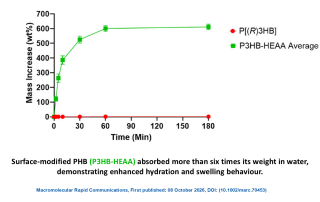
Enhancing the functionality of biodegradable PHAs through chemical modification

Polyhydroxyalkanoates (PHAs) are a family of biodegradable and bio-based plastics with significant potential as sustainable alternatives to conventional polymers. One of the most widely studied PHAs is poly(3-hydroxybutyrate) (PHB). However, its relatively brittle nature and limited capacity to interact

2026-10-13T15:16:23+10:00October 13, 2026|

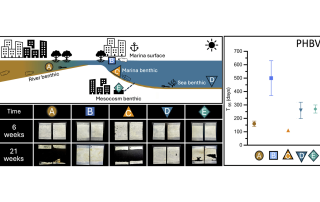
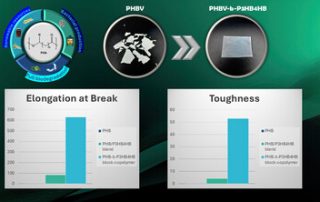
Improving the mechanical properties of biodegradable polyhydroxyalkanoates via PHA-PHA block-copolymer synthesis

Polyhydroxyalkanoates (PHAs) are a family of biodegradable and bio-based plastics with significant potential as sustainable alternatives to conventional polymers. However, the relatively low toughness of many PHA materials can limit their suitability for applications that require greater flexibility and

2026-09-22T11:57:26+10:00September 8, 2026|

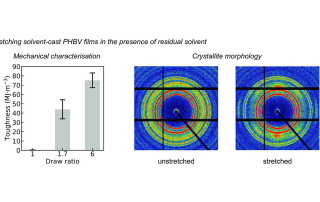
Improving the toughness of biodegradable PHBV films

Polyhydroxyalkanoates (PHAs) are a family of biobased and biodegradable polymers that are attracting increasing interest as alternatives to conventional plastics. Produced from renewable resources and biodegradable in appropriate environments, PHAs offer significant potential for reducing the environmental impacts associated

2026-08-24T16:24:40+10:00August 24, 2026|

2026 Research & Training Symposium Brings Researchers Together on Minjerribah

The ARC Training Centre for Bioplastics and Biocomposites welcomed HDR students, early career researchers, investigators and collaborators to its annual Research & Training Symposium at UQ's Moreton Bay Research Station on Minjerribah from 17-19 June 2026. Bringing together researchers from

2026-08-04T16:47:07+10:00July 4, 2026|
Go to Top