
Controlled release agricompounds using biodegradable polymers
Our Centre is developing next‑generation controlled‑release technologies using PHA (polyhydroxyalkanoate) — a natural, fully biodegradable polymer that breaks down in all environments without leaving microplastic residues. These materials enable precise, efficient, and environmentally responsible delivery of agrichemicals including fertilisers, pesticides, methane inhibitors, and nitrification inhibitors.
Video of biodegradable polymer coated urea granules. Video was constructed using Micro CT.
Why control agricompound release?
Conventional agricompounds often release faster than plants, animals or microbes can use them. This mismatch between supply (rapid release) and demand (slow uptake) results in wasted product, increased application frequency, and greater environmental losses.
Controlled‑release coatings align the release rate with real biological demand — improving efficacy, reducing loadings, and lowering emissions and nutrient losses.

Our controlled release technologies
Our controlled‑release technologies bring together a suite of polymer processing methods with two PHA‑based system types. These combinations allow us to tailor release profiles for specific agrichemicals and application requirements.
Ultra‑thin PHA coatings are applied using techniques such as solution spray coating, solvent casting, dip coating and pan coating.
Distributed PHA matrices can be produced through melt‑based processes including extrusion, reactive extrusion, and injection moulding.
This integrated approach enables precise, tuneable and environmentally responsible release behaviours.

Successful controlled release prototypes
We have demonstrated controlled‑release behaviour across a range of agrichemicals, including pesticides, methane inhibitors, nitrification inhibitors and fertilisers. These prototypes show tuneable release over extended periods, confirming the robustness and flexibility of our coating and matrix technologies.

Why PHA? A natural, biodegradable plastic
PHA is uniquely suited to controlled‑release formulations because it:
- Is fully biodegradable in soil, marine, compost, and anaerobic digestion environments
- Does not produce legacy microplastics
- Has versatile mechanical and barrier properties
- Is bio‑based and low‑carbon
- Is biocompatible and non‑toxic
- Can be engineered into thin coatings, films, microspheres, and composite matrices
End-of-life: Biodegradation Studies
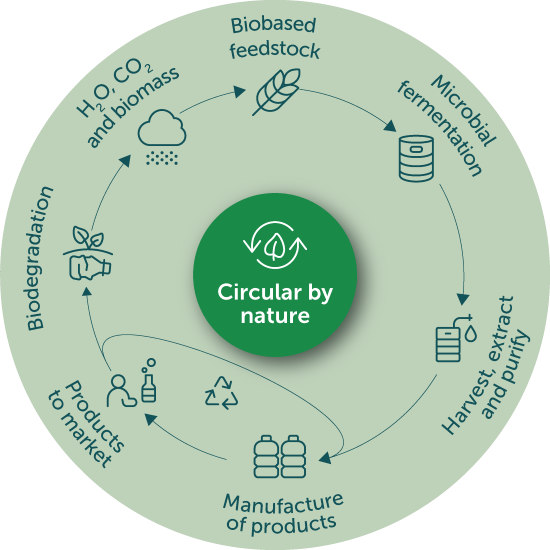
PHA naturally biodegrades in all natural and engineered environments to CO₂, microbial biomass and water, with no legacy microplastic formation. We have confirmed PHA biodegrades rapidly in soil, marine water, compost and anaerobic digestion.

Ocean biodegradation over 18 weeks
Our Capabilities
We provide end-to-end capability to develop, prototype and validate PHA bioplastics, leveraging UQ’s state-of-the-art facilities and research expertise.
What we offer:
- Prototype product development: films, extruded products, injection moulded parts, composites, coatings, 3D printing
- Performance testing: mechanical, thermal, barrier analysis
- Bio/degradation assessment: soil, marine, composting, anaerobic digestion, UQ/accelerated aging
- Advanced characterisation techniques
- Socio- and technoeconomic assessments
- Polymer processing: Extrusion/reactive extrusion, Fluidised bed spray coating, Pan and drum coating, Solvent casting/dip coating, Film blowing, Injection moulding, Melt mixing, Melt press, Cryo-grinding, Ball mill, Parr pressure reactors

Partner With Us
Work with us to accelerate sustainable product innovation.
We collaborate with industry partners to co‑develop controlled‑release systems for:
- Fertilisers
- Pesticides
- Inhibitors (nitrification, methane)
- Veterinary and animal health applications
- Microbial products
- Novel agricompound delivery challenges
Looking to develop a tailored controlled‑release solution?
Our team can help you design and prototype systems that improve efficacy, reduce environmental impacts, and enhance performance in real‑world agricultural settings.
Contact us to start a conversation

