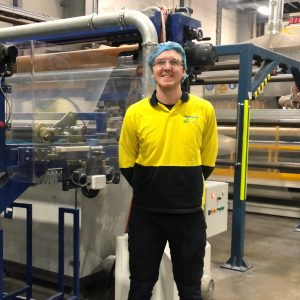
Industry placements give organisations access to motivated research students with hands‑on capability in bioplastics, polymer processing, controlled‑release systems and biodegradation testing. Our students join partners and other leading organisations in the bioplastics and biocomposites sector for short‑ or medium‑term projects, contributing technical capability, fresh perspectives and targeted support across materials development, prototyping or environmental assessment.

Placements provide an easy, low‑barrier way for organisations to progress feasibility work, support innovation and explore collaboration with our Centre and partner universities.

The case studies below highlight some of the successful placements our students have completed.
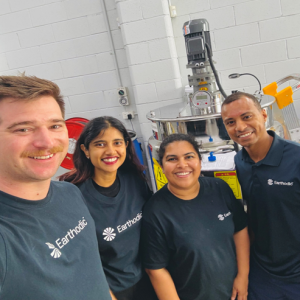
Bio‑based Coating Development with Earthodic

During a placement with Earthodic, Suleshi Gedara, a student from QUT’s Faculty of Science, worked on formulation development, coating application, and characterisation testing, contributing to Earthodic’s mission to scale innovative materials for commercial use. Her role also included data analysis, reporting, and participation in technical meetings, providing insight into the commercialisation process.

Bioplastics Landscape Analysis with APCO

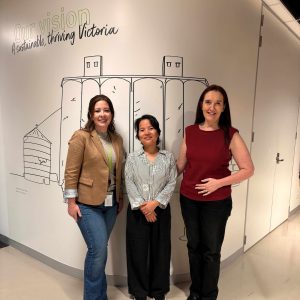
During a placement with the Australian Packaging Covenant Organisation (APCO)Sita Bantha Magar, a student from The University of Queensland (UQ), Business School, produced an industry report to map the current landscape of bioplastics in Australia’s packaging sector. Her work involved reviewing literature, analysing markets, and identifying key stakeholders and regulatory trends. She also gained valuable industry exposure by attending APCO’s Materials Stewardship Committee meeting in Melbourne and visiting Plantic Technologies.

Resin and Coating Development with Plantic Technologies

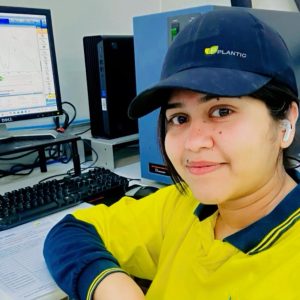
Sewwandi Jaburegoda Pathiranage, a PhD researcher from the QUT School of Chemistry & Physics, completed an industry placement with Plantic Technologies Ltd., contributing to the development of new biodegradable coating applications for packaging. Her work included resin characterisation, and quality‑control testing to support Plantic’s ongoing innovation in sustainable packaging.

Life Cycle Assessment for Sustainable Packaging with Lifecycles

During a placement with Life Cycle Strategies Pty Ltd, Caitlin Welsh, a PhD researcher from The University of Queensland’s School of Chemical Engineering, developed skills in life cycle assessment (LCA) using SimaPro and PiQET software. She carried out comparative studies on packaging trays made from virgin and recycled polyethylene (PE), polyhydroxyalkanoates (PHA), and paper, contributing to sustainable packaging design and industry-relevant environmental impact analysis.

Recycling of rPET from Plantic™ Packaging

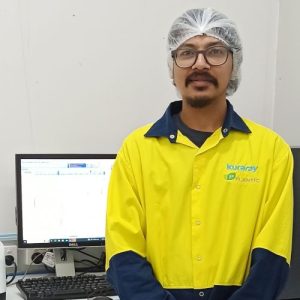
During a placement with Plantic Technologies Ltd., Md Abir Talukdar, a PhD researcher from The University of Queensland’s School of Chemical Engineering, worked on developing a recycling system to recover PET (rPET) from Plantic’s multilayer packaging materials. His project involved chemical and physical treatments to separate layers and assess recyclability, contributing to Plantic’s circular‑economy goals.

Early‑Career Sustainability Placement with City of Gold Coast

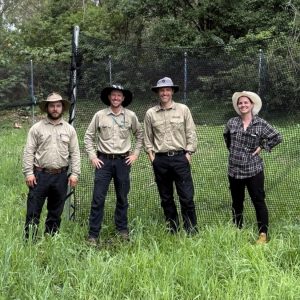
During a placement with the Council of the City of Gold Coast, Katrin Kockler, a Postdoctoral Researcher from The University of Queensland’s School of Chemical Engineering, worked across sustainability, environmental management, biosecurity and climate‑risk teams to gain insight into council operations. Her placement involved water quality sampling, wastewater treatment plant tours, feral deer management fieldwork and contributing to a Climate Risk Assessment and Adaptation Plan.

Rheology of starch-based resins with Plantic

During a placement with Plantic Technologies Ltd., Sam Lawless, a PhD researcher from The University of Queensland’s School of Chemical Engineering, investigated the flow behaviour of starch‑based resins using a capillary rheometer. His work included developing formulations to assess the impact of ingredients on rheology and conducted PET recycling trials on multilayer trays to support Plantic’s materials innovation pipeline.